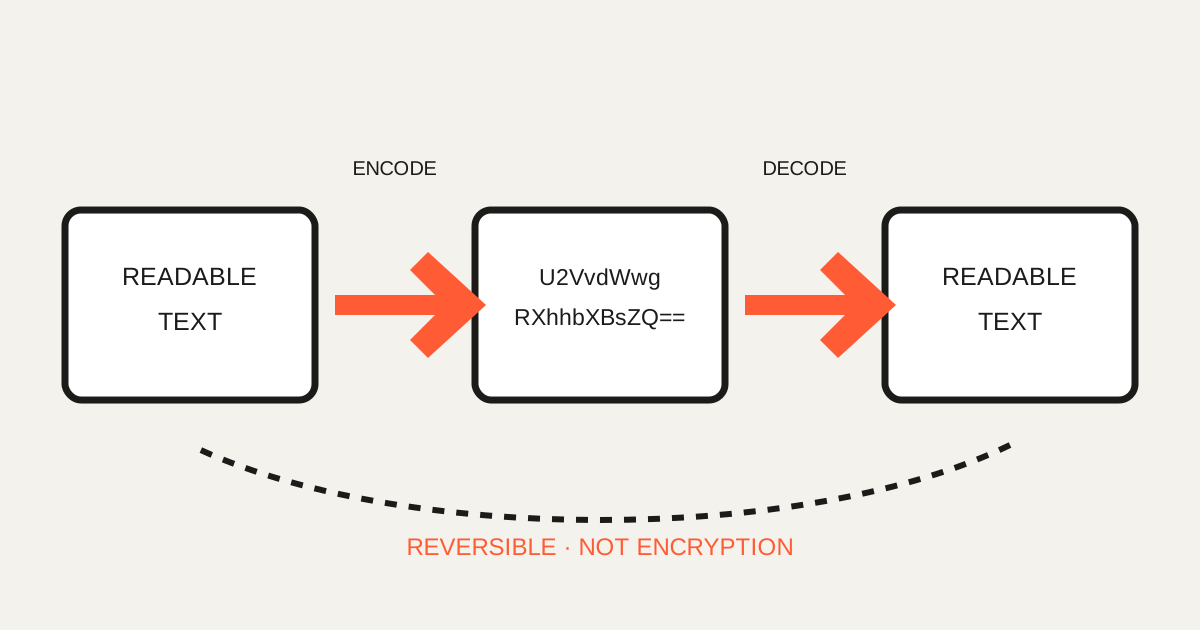
Is Base64 encryption?
No. It is reversible encoding with no secret key.
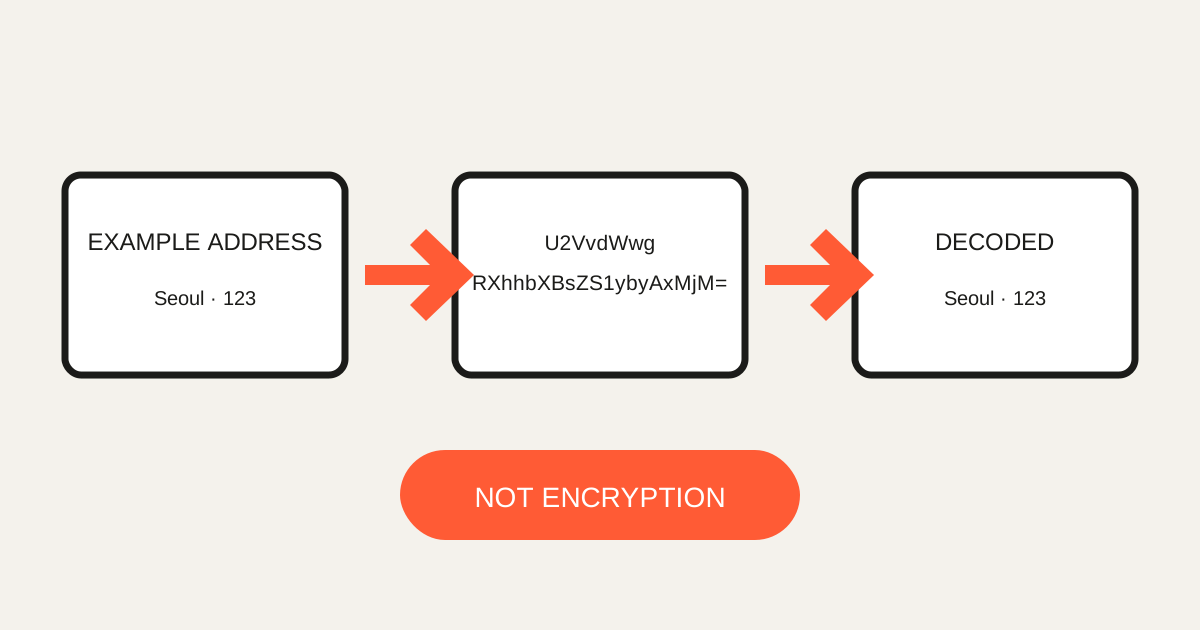
Simple obfuscation for an address or phrase
‘Seoul Example-ro 123’ becomes ‘U2VvdWwgRXhhbXBsZS1ybyAxMjM=’. This may avoid immediate plain-text reading, but it provides neither security nor guaranteed search-engine exclusion. Real restrictions require access control and, where relevant, robots settings.
Carry line breaks and special characters
A UTF-8 string containing newlines, quotes, partial HTML or JSON can be represented as one restricted-character string for a system that expects Base64.
- Both sides must agree on Base64 and UTF-8
- Encoding does not validate JSON or HTML
- Do not execute decoded untrusted content
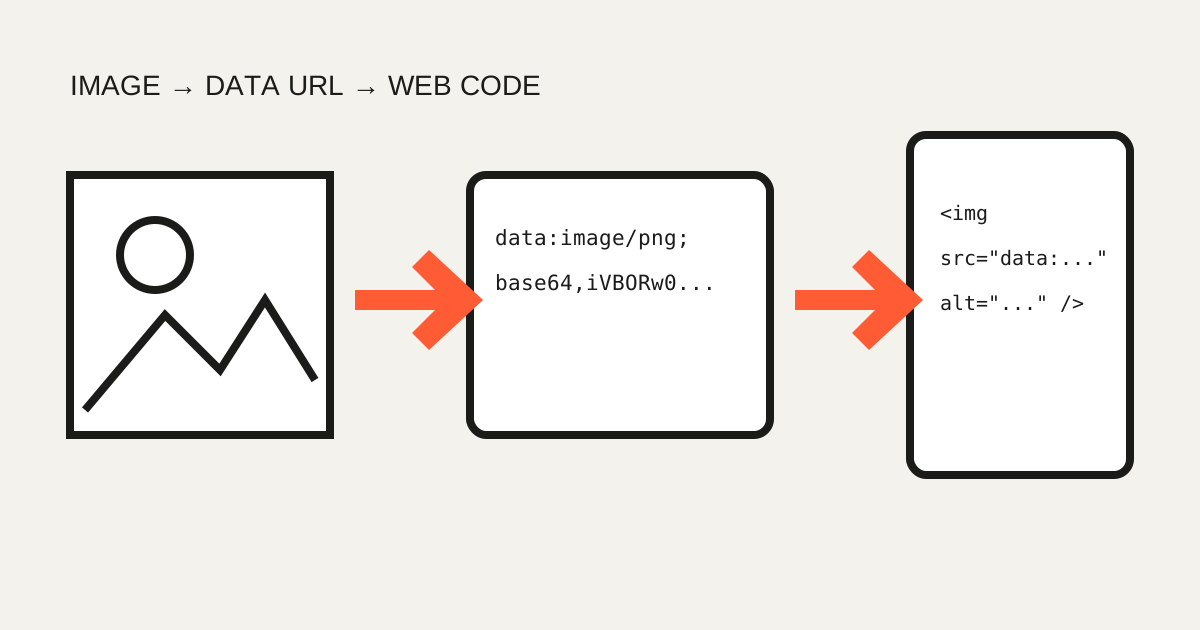
Represent an image as text
Web code can embed a small image as data:image/png;base64,... . Larger data URLs add overhead and are harder to cache separately, so use them only for a clear reason.
Encoding versus encryption
| Question | Base64 | Encryption |
|---|---|---|
| Purpose | Change representation | Prevent unauthorized reading |
| Reversal | Anyone with a decoder | Usually needs a key or permission |
| Security | None | Depends on correct design and key handling |
| Password storage | Unsuitable | Use a purpose-built secure method |
A safe workflow
Only My Kit performs this text conversion in the current browser. Local processing does not make the Base64 output secret.
- Confirm the text is safe if exposed.
- Use UTF-8 consistently.
- Encode it.
- Decode once to verify the round trip.
- Tell the recipient the format.
FAQ
- Is Base64 encryption?
- No. Anyone can reverse it with a decoder.
- Does Base64 prevent search indexing?
- No guarantee. Use access control and appropriate indexing controls for real restrictions.